
JCB is a British equipment manufacturer and it’s mainly famous for heavy machinery, from backhoe loaders, excavators to tractors. In many places, especially in the UK and India, people casually call any digger a “JCB” because the brand became so well known. But, 20 years ago JCB diesel-powered car broke the world’s land speed record, and now two decades later they say “it is time to do it again” with JCB Hydromax.
JCB is heading back to Bonneville, aiming to beat the current hydrogen fuel-cell record of about 303MPH, aiming for 350MPH speed to prove that hydrogen combustion engines can deliver serious real-world performance. The existing record for a hydrogen internal combustion engine vehicle is 185.5mph; the hydrogen fuel cell car’s record is 303mph; and the electric vehicle’s record is 342mph.
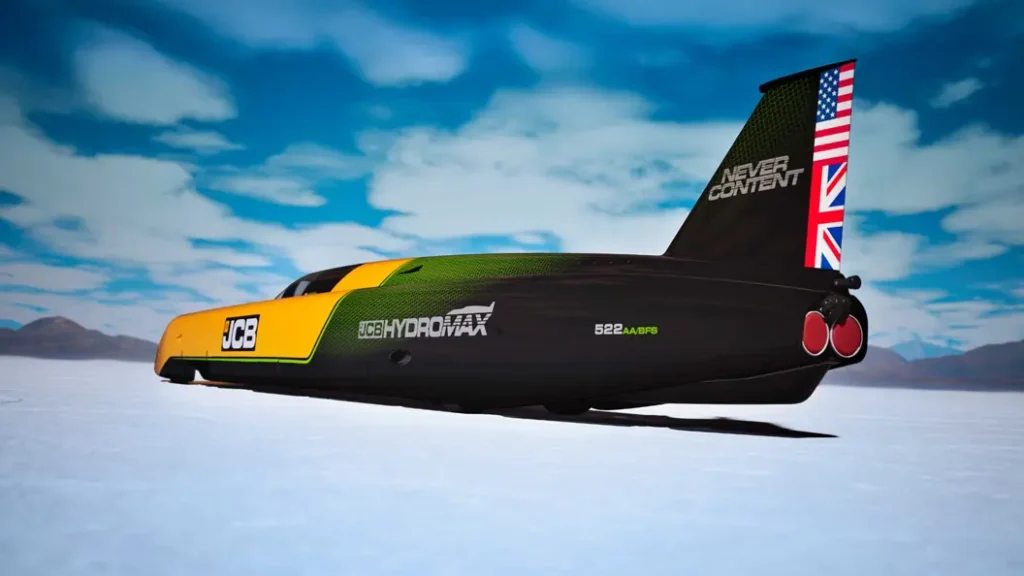
This 32-foot streamliner powered not by batteries or fuel cells, but by hydrogen combustion engines developed after a five-year, £100m research effort, is far from your average engineering project. The Hydromax has been designed purely for speed, combining cutting-edge aerodynamics with twin hydrogen combustion engines producing a staggering 1,600bhp combined.
“JCB’s quest for engineering and design excellence is something our team pride themselves on. We’ve given JCB speed a whole new meaning, with a vision that saw us break three world records: the fastest diesel-powered car, backhoe loader and tractor. These impressive breakthroughs are pioneered by teams of JCB engineers and innovators determined to be the best.”
What makes the project even more exciting is the technology behind it. Unlike many hydrogen vehicles that rely on fuel cells and electric motors, JCB has chosen to develop a hydrogen-burning internal combustion engine. In simple terms, it works more like a traditional petrol or diesel engine, just powered by hydrogen instead. For enthusiasts and engineers alike, that matters. Hydrogen combustion keeps the sound, feel, and mechanical character of an engine alive while massively reducing harmful emissions. It also allows manufacturers to adapt existing engine technology rather than completely reinventing vehicles from the ground up.
The man behind the wheel will be none other than Andy Green – still the fastest man on Earth – the same driver who famously broke the sound barrier on land with Thrust SSC.
JCB Hydromax isn’t just chasing records for publicity, the project is closely linked to the company’s wider hydrogen programme, which already includes hydrogen-powered excavators, telehandlers, generators, and heavy machinery currently undergoing real-world testing.
If successful, the Hydromax could become a defining moment for hydrogen performance technology, proving that sustainability and excitement that can still go hand in hand.
At Novatech Culture, we love seeing companies push boundaries instead of following trends. And honestly, a 350mph hydrogen-powered missile built in Britain sounds exactly like the kind of thing we want to see.
Find more stories like this one, and sign up to Novatech Culture newsletter for news, offers and special features.
Share this story to:




£45.00 Original price was: £45.00.£40.00Current price is: £40.00.
£45.00 Original price was: £45.00.£40.00Current price is: £40.00.
Receive 15% off our full range when you sign up to our newsletter.
You can unsubscribe at any time.