
Formula 1 drivers may only spend a few hours each weekend inside their cars, but the preparation behind those moments is relentless, scientific and physically exhausting.
Modern Formula 1 is no longer just about raw talent. Today’s drivers train like elite athletes, engineers, fighter pilots, and esports competitors all at once. With strict testing regulations limiting track time and F1 cars costing millions to operate, most of a driver’s preparation now happens away from the circuit — inside simulators, gyms, briefing rooms, and mental training sessions.
From Lewis Hamilton’s frustration with Ferrari’s simulator programme to Max Verstappen spending hours racing online between Grands Prix, the world’s best drivers are constantly sharpening their edge before lights out on Sunday.
So how do Formula 1 drivers actually practice?
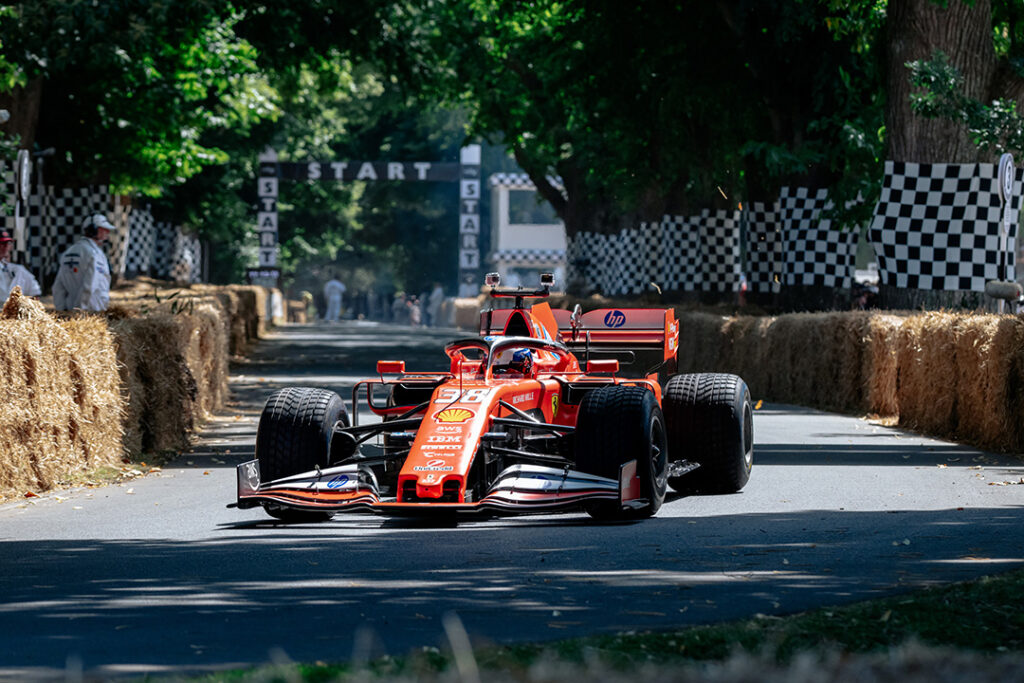
Modern Formula 1 teams rely heavily on Driver-in-Loop simulators, commonly known as DiL simulators, which are housed inside their factory headquarters.
These are not glorified video games. They are multi-million pound machines designed to replicate every sensation of driving a Formula 1 car.
The simulator cockpit mirrors the exact dimensions of the real car, including the steering wheel layout, pedal sensitivity, seating position, and dashboard systems. Drivers sit inside motion rigs capable of simulating braking loads, cornering forces, vibrations, and elevation changes.
Even the circuits themselves are recreated in microscopic detail. Tracks are laser-scanned to capture every bump, curb, surface change, and camber angle down to the millimeter.
Teams use simulators for almost everything:
Because Formula 1 regulations heavily restrict real-world testing, simulator work has become one of the most important parts of a driver’s weekly schedule.
Lewis Hamilton recently admitted he planned to reduce simulator usage at Ferrari after struggling with correlation issues between virtual data and real-world car behaviour.
“I don’t like simulators in general,” Hamilton said ahead of the Canadian Grand Prix. “You prepare for the track, then arrive and the setup doesn’t work.”
Despite that criticism, simulator work remains central to every F1 team’s operation.
During a standard Formula 1 race weekend, drivers usually receive three one-hour Free Practice sessions before qualifying begins.
Known as FP1, FP2 and FP3, these sessions are crucial for refining the car setup and adapting to track conditions.
But the work actually begins before the drivers even climb into the cockpit.
On Thursday afternoons, drivers and engineers perform detailed track walks, physically walking the entire circuit to study:
Drivers then relay feedback to engineers, helping tailor setup adjustments before practice even begins.
Once on track, teams gather enormous amounts of telemetry data:
Every lap becomes a live engineering experiment.
This is especially important because modern F1 weekends are incredibly compressed. Sprint weekends reduce practice time even further, meaning drivers often have less than two hours to perfect a car before qualifying.
Driving a Formula 1 car is one of the most physically demanding jobs in world sport.
Drivers routinely experience forces of up to 6G through high-speed corners, while cockpit temperatures can exceed 50°C during races.
That means physical preparation is non-negotiable.
The neck absorbs enormous lateral loads during cornering, particularly at tracks like Suzuka, Silverstone and Qatar.
To prepare, drivers use:
A weak neck can dramatically affect concentration and reaction times late in races.
Heart rates regularly remain between 160–190 BPM for nearly two hours during races.
Drivers therefore focus heavily on:
Core strength is another major priority because drivers constantly brace themselves under braking and cornering loads.
Many drivers also cross-train using sports that improve reaction speed and hand-eye coordination, including:
Max Verstappen and Lando Norris are also known for spending significant time sim racing online, which helps sharpen racecraft and reflexes even outside official team sessions.
One of the most overlooked parts of Formula 1 preparation happens entirely inside the driver’s head.
Before races, drivers spend hours visualizing laps corner-by-corner.
They mentally rehearse:
This process builds neurological “muscle memory,” helping drivers react instinctively at over 200mph.
Many drivers combine visualization with breathing techniques and sports psychology sessions to improve focus under pressure.
Fernando Alonso and Lewis Hamilton have both spoken in the past about the importance of mental calmness and rhythm during races, particularly in changing weather conditions where split-second decisions determine outcomes.
Modern F1 drivers are deeply involved in technical analysis.
After every session, drivers spend hours reviewing telemetry with engineers to compare:
Drivers are constantly searching for tiny gains — sometimes worth only hundredths of a second.
This collaboration has become increasingly important in the hybrid era, where energy deployment systems, battery management, and tire preservation can decide races.
Drivers now effectively operate as part-athlete, part-engineer.
With a 24-race calendar stretching across multiple continents, recovery is now one of Formula 1’s biggest competitive advantages.
Drivers travel constantly between time zones while managing intense media schedules and sponsor commitments.
To stay sharp, most teams employ specialists focused on:
Ice baths, physiotherapy, massage treatment, and wearable biometric tracking are now standard parts of Formula 1 life.
Even small drops in concentration can have huge consequences at 200mph.
Gone are the days when Formula 1 drivers simply arrived on Friday and drove on instinct.
Today’s drivers prepare year-round using cutting-edge simulation technology, scientific physical conditioning, engineering analysis, and mental performance training — all before the race weekend even begins.
And with Formula 1 margins now measured in thousandths of a second, preparation itself has become one of the sport’s biggest battlegrounds.
That’s why when drivers like Lewis Hamilton question simulator effectiveness, or Max Verstappen spends late nights sim racing online, it matters far more than fans might initially realise.
Because in modern Formula 1, the race often begins long before the cars ever reach the grid.
Share this story to:




£45.00 Original price was: £45.00.£40.00Current price is: £40.00.

£45.00 Original price was: £45.00.£40.00Current price is: £40.00.
Receive 15% off our full range when you sign up to our newsletter.
You can unsubscribe at any time.